Founding
Union’s Carnegie Library was given to the citizens of our community in 1912. It has not been changed from its historical structure and is still being used as a library.
The summer of 1912 the city of Union received a letter with a postmark from Scotland. It was from Andrew Carnegie and in the letter the gentleman offered to give the city $5,500 to build a new library. With the money the city let a contract to build a brick building and construct a levee along Catherine Creek for protection. Andrew Carnegie requested only one thing for his $5,500, that his name be displayed on the front of the building and that it be noted that the Union Library was a gift from him.
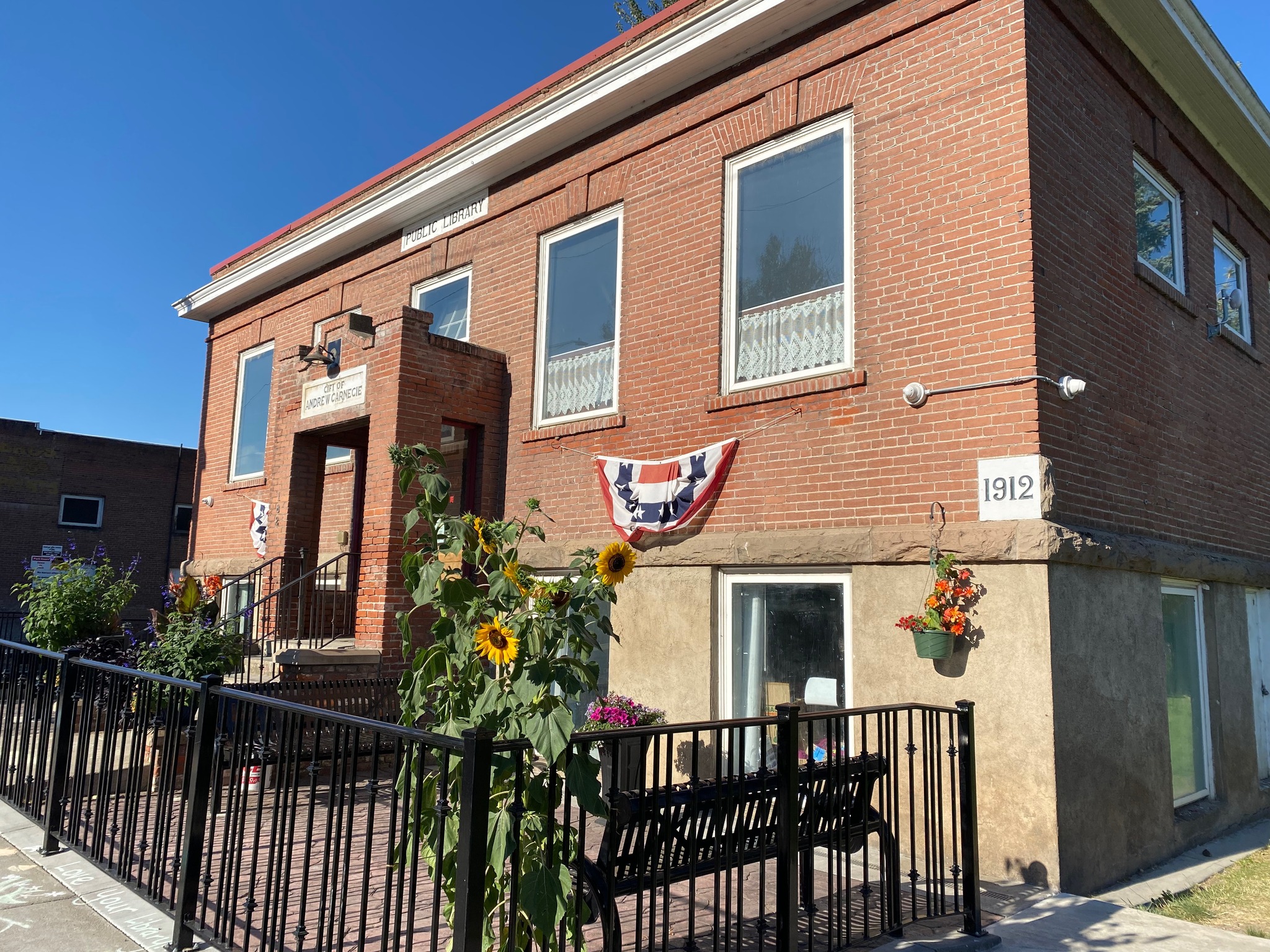
Today our librarian does a marvelous job of stocking the library with current and useful materials. We have internet access on a high-speed wireless connection. Currently the library is expanding its audio book collection and we offer Proctoring for college students. There is also a reference section with historical records from Union and its surrounding area.
It is carefully managed and protected by a 5-member Library Board of Union residents. Board members are volunteers who are appointed by the Mayor and approved by the City Council. Each serves a term of 4 years.
Come in and “check-out” all your Public Library has to offer! See you soon!
The Union Carnegie Public Library follows Oregon state law, which exempts libraries from public disclosure of “the records of a library, including (a) circulation records, showing use of specific library material by a named person; (b) the name of a library patron together with the address or telephone number of the patron; and (c) the electronic mail address of a patron” ORS 192.355 (23).
The Union Carnegie Public Library treats patron information as strictly confidential to the extent permitted by law. It is generally for the use of library staff only; it can, of course, be divulged to the patron. Unless required by law, patron information is not to be given to non-library individuals, including parents, friends, professors, university administrators, police, FBI, university security staff, or the CIA.